

.
.
If you suspect it, report it.
.


.
Confirmation Content
Please note that the 1109 Hotline operates during the following hours: Monday to Friday, 9:00 a.m. to 10:00 p.m., and weekends and public holidays, 12:00 p.m. to 8:00 p.m. If your situation is urgent and occurs outside of these hours, please call 100 (Greek Police) or 112 (European Emergency Number). For any other information, you may complete the form below or email us at info@1109.gr.

Confirmation Content
Thank you.
Your report has been submitted successfully.
Confirmation Content
HUMAN TRAFFICKING
WE CAN HELP
Are you a victim of human trafficking? Do you have information about a potential trafficking situation?
1109
.
What is human trafficking?
Human trafficking is the illegal trade of people for the purposes of forced labor and sexual exploitation.
As the world’s fastest growing criminal industry, it affects every nation across the globe, and is also defined as modern-slavery.
It’s the illegal trade of human beings. It’s the recruitment, control, and use of people for their bodies and for their labor. Through force, fraud, and coercion, people everywhere are being bought and sold against their will–right now in the 21st century.
Victims of human trafficking can include all walks of life. It can include men and women, minors and adults who are coerced or deceived into commercial sex acts, and anyone forced into different forms of “labor or services,” such as domestic workers held in a home, beggars on the street, or farm-workers forced to labor against their will.

The existence of these three elements
constitute the crime of Human Trafficking
* "A-M-P MODEL" https://humantraffickinghotline.org/
sites/default/files/AMP%20Model.pdf
.
.

Sex
Trafficking

Forced
Labor

Domestic
Servitude
.
.

Forced
Begging

Forced
Organ
Removal

Forced
& Early
Marriages
.
Sex
Trafficking
Forced
Labour
Domestic
Servitude
Forced
Begging
Forced
Organ
Removal
Forced
& Early
Marriages
WE CAN HELP
Are you a victim of human trafficking? Do you have information about a potential trafficking situation?
1109
GREECE

Greece: Known as ‘the center of trafficking in Europe’. A primary destination and transit country for human trafficking, Greece is the primary gateway for trafficked victims to enter the European Union, host to 90% of all EU illegal immigration.
Trafficked victims are moved frequently, both internally and across borders, to evade detection. Human trafficking is a hidden crime here, with most citizens unaware of the gross human rights abuses occurring in their own city.
There are a few main approaches traffickers use to lure victims: Fake job offers, mainly for jobs abroad. When the person arrives, she/he finds that the conditions are different from the ones advertised in the job offer - often the victim’s ID is taken away, and she/he is forced into labor or sexual exploitation. Lover boy - the trafficker courts the victim and pretends to be falling in love with her. Once he earns the victim’s trust, he sells her/him to be sexually exploited.
FACTS:
– It is estimated that 49.6 million people are held in modern slavery today.*
– Almost one in four victims of modern slavery are children.*
– Women and girls account for 77.8% of victims in the commercial sex industry.*
* Global Estimates of Modern Slavery : Forced Labour and Forced Marriage. 2022. 1st ed. Geneva: ILO. https://doi.org/10.54394/CHUI5986
Confirmation Content
.
.
Human Trafficking is
the fastest growing crime
in the world.
.
.
.
.
.
.
.
.
.
.
Confirmation Content
.
.
.
You can be the reason someone finds freedom.
.
.
.
.
.
You can be the reason someone finds freedom.
.
.
.
About Us 
.

.
.
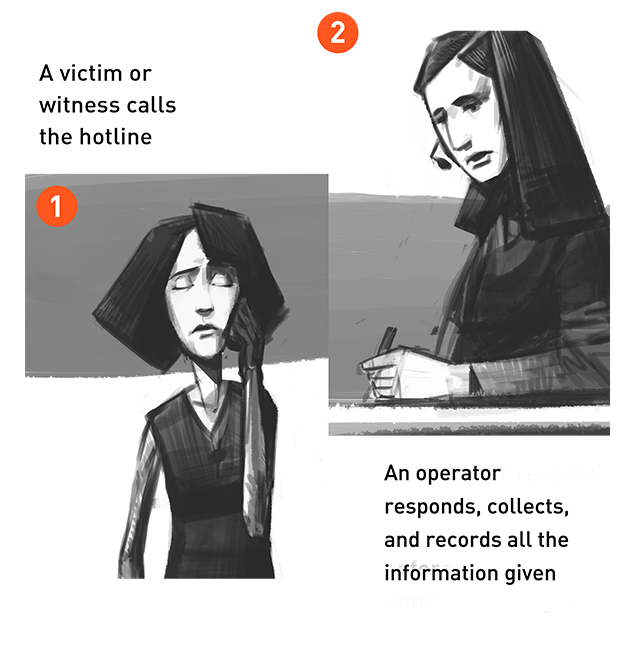
1109 is a national Human Trafficking Hotline in Greece.
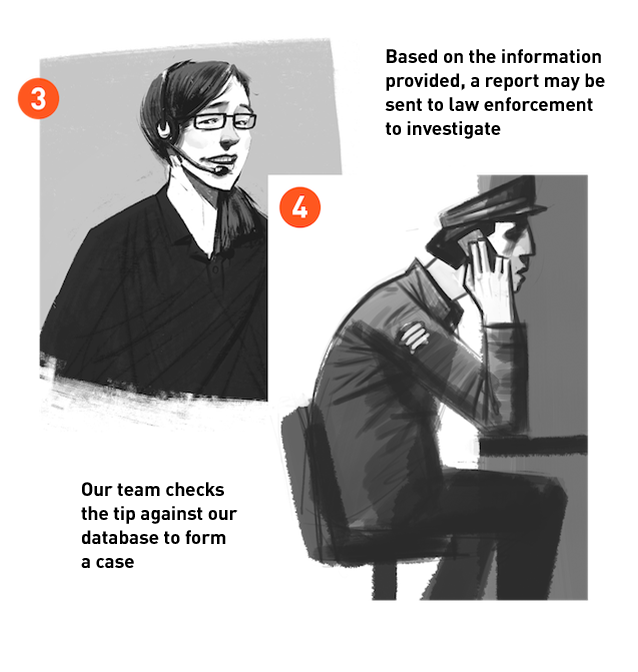
The 1109 Hotline takes calls 7 days a week and is equipped to handle calls in all languages. The 1109 Hotline’s call operators can communicate in both English and Greek. The 1109 Hotline is also able to connect to a tele-interpreting service with access to over 200 languages, during every call. Hotline operators are specially trained professionals, who follow international procedures ensuring the fastest response to each case. The 1109 Hotline works in close partnership with law enforcement, national institutions and partner organizations to ensure rapid response and effectiveness.
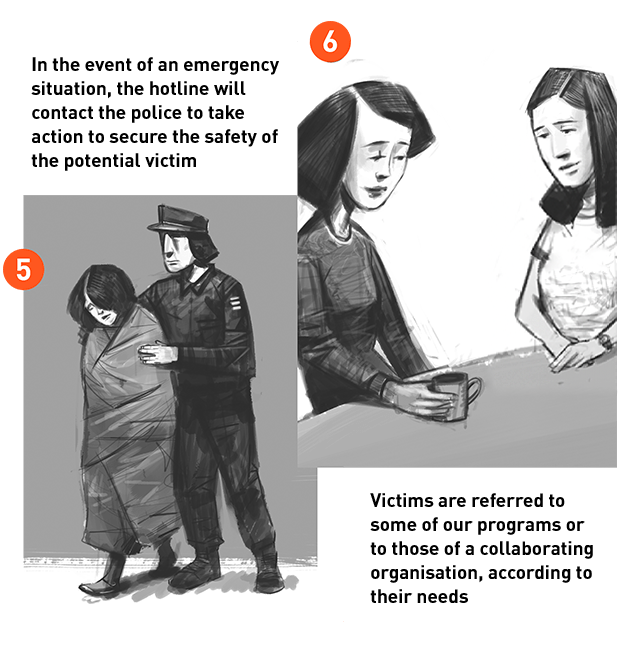
The 1109 Hotline, which is also part of the National Referral Mechanism for the Protection of Victims of Trafficking (NRM), provides the following services to victims of human trafficking:
• Identification
• Protection
• Accommodation
• Legal counselling and representation
• Interpretation
Confirmation Content
Confirmation Content
How it works
How it works
.O
.O
Confirmation Content
How it works
.
.
Confirmation Content
How it works
.
.
.
How it works
Confirmation Content
.
PROTECT YOURSELF
As you travel, work, or use the internet, it is vital to be aware of modern-day slavery, and to know how to stay safe.
Confirmation Content
.
Click on the titles listed to learn more about important information on protecting yourself & download the informational flyer here. ▸
Here are a few things you can do to make sure you don't become a victim of labor trafficking when you plan to apply for a job abroad:
+ Confirm that the organization offering the job is licensed.
+ Have a valid visa - Any non-EU national in order to work in Greece needs a Residence permit.
+ The work contract should always be bilingual — in a language you speak fluently, as well as in the official language of the country where you plan to work.
+ Never sign a contract written in a language you don't know well. Check the contract carefully for all the details about the working conditions. Don't sign a contract that has unclear or really general statements.
+ Keep contact details with you of the organization that handles foreign national issues, as well as the embassy/consulate in the country you are going to.
+ Give your family/friends detailed information on where you are going and staying, as well as a recent photo of you and the people you are travelling with.
+ Prepare all documents you will need and make copies.
+ Never give your ID to anyone. Always carry it with you.
+ Set an emergency signal with your relatives/friends, which you can use in case of emergencies.
+ Keep a small amount of money with you at all times incase of emergencies.
+ Learn some phrases in the language of the country you are visiting. Make sure you know how to ask for directions, and where to find the closest hospital or police station.
+ Make sure you know the emergency code in the country.
Travels are usually a source of positive emotions, especially when you are going on vacation, but at the same time it is a risky situation because you leave your home and go to a foreign territory with people you don’t know. Often, because of this vulnerability, travellers become victim of crimes, and sometimes trafficking.
+ Always keep contacts of organizations that handle foreign nationals issues, as well as the Embassy/Consulate within the country you are visiting.
+ Provide your family/friends with:
- Detailed information on your travel itinerary.
- Copies of your travelling documents and passport.
- Recent photo of yourself and the people you are travelling with.
+ Set an emergency signal with your relatives/friends, which you can use in case of emergencies.
+ Prepare all documents you will need and make copies.
+ Never give your ID to anyone. Always carry it with you.
+ Be careful and keep your eyes open for suspicious activities near you. Inform your relatives/friends in case you see or hear something.
+ Keep a small amount of money with you at all times in case of emergencies.
+ Learn some phrases in the language of the country you are visiting. Make sure you know how to ask for directions, and know where to find the closest hospital or police station. Memorize the telephone number of at least one relative/friend.
+ Make sure you know the emergency code in the country.
+ Be careful and cautious when talking to strangers. Never share your whole name or where you are staying. If you think someone is following you, immediately head to a more populated area and don’t hesitate to call the police.
+ Avoid:
- Travelling alone, at night or in dark alleys.
- Getting into cars with people you don’t know.
- Accepting food or drinks from people you don’t know.
- Risky situations.
Very often, traffickers find their victims on the internet. Because everyone is free to create his/her profile, the identity of the users and the credibility of the information they publish is rarely guaranteed. Children and teenagers are specifically in danger of becoming victims of trafficking over the internet, since they are more vulnerable and less experienced. This is why we prepared a list of good advice for safe online activity:
+ If you decide to go on a date with someone you met online, remember that this is a high-risk situation, so you need to take some precautions. This might mean meeting with the person at daylight in a busy, central place, where nobody can abduct or hurt you. If the other person wants to meet in an apartment, at a dark or secluded place, or a park, this is a red flag that the person might be very dangerous.
+ When meeting someone off the internet, tell a friend, a relative, a colleague or someone who you can trust. It’s a good idea to have a safety plan in mind in case something goes wrong - for example, have the one you trust call you and come up with a code word if you need him/her to come pick you up (or insinuate that you have to leave right away).
+ Never give your personal ID, address, phone number, name, address of your school/university, or information about your relatives and family members to strangers or people you met online and don’t know very well.
+ Do not open messages with vulgar, inappropriate, dangerous or insulting content. Block users who send messages like these.
+ Never send pictures to people you just met online. Restrict the visibility options of your photos and the information you publish online to only close friends.
Confirmation Content
1109
Confirmation Content
.
.
.
If you suspect it,
report it.
.
.
.
..
.
.
.
.
Confirmation Content
.
Learn More
What can I do?
Speak with an operator who will answer any specific question. Click below to learn more about identifying human trafficking.
Call 1109 to speak with an operator who would be happy to answer any specific questions you might have about what you can personally do to help stop human trafficking in Greece.
Indicators or red flags that may identify a possible trafficking victim:
GENERAL TRAFFICKING INDICATORS:
– Evidence of being controlled: the person is accompanied by a controlling person, and does not speak on their own behalf. The person is transported to or from work; lives and works at the same place and is rarely allowed in public.
– Lack of control over personal schedule: the person is not able to move freely or leave a job. For example a woman who works 24/7, sees an unusual number of clients and has no time for herself.
– The person recently arrived in the country: they often don't speak the language, or only knows words related to their work.
– Fear, depression and overly submissive behaviour: the person is frightened to talk to outsiders and authorities as a result of threats.
– Poor health, malnutrition, serious dental problems, untreated sexually transmitted diseases (STD's)
– Bruises, scars and other signs of physical abuse and torture.
– Substance abuse problems or addictions: victims are often coerced into substance abuse (drugs, alcohol, pills, etc.) by his/her traffickers as a force of control as they are then dependent on the trafficker for these substances.
– Lack of control over money: the person is not able to keep the money earned. It is “withheld for safe-keeping”. Most of the time the person owes debts to the employer.
SIGNS OF SEX TRAFFICKING:
– Minors involved in the commercial sex industry.
– Signs of physical, sexual or psychological abuse.
– There is evidence that the individuals have been sold and bought.
– Νo control over the working hours, the number of clients they meet or the type of sexual services they are forced to provide.
– They are forced to provide sexual services even if they are ill or they do not want to.
– Unusually high numbers of sexual partners and use of language common in the commercial sex industry.
– Untreated sexually transmitted diseases, unprotected sex, forced termination of pregnancy.
– Branded with tattoos or other forms of branding that indicate they belong to a trafficker who controls them.
– Trauma bonding with a trafficker or other victims (e.g. Stockholm syndrome).
– Clients of brothels report that the women seem nervous and fearful.
SIGNS OF LABOUR TRAFFICKING:
– Absence of labor contract.
– Imposed place of accommodation, which is often the same as the workspace.
– Restriction of movement and confinement, high-security measures in work and/or living locations.
– An excessive amount of work hours with few or no breaks.
– Work under the threat of violence, abuse, intimidation or other control methods.
– Lack of the necessary training and equipment for the work they are doing.
– Poor or non-existent health and safety standards.
– Job announcements published in foreign languages only.
– Debt bondage i.e. working to pay off a debt or loan, often the victim is paid very little or nothing at all for their services because of deductions.
– The employer threatens the workers to reveal to authorities their immigration status unless they comply with his demands.
SIGNS OF FORCED BEGGING:
– Children, elderly or disabled people who are forced to beg, while they are controlled by a trafficker who collects most of the money they earn.
– They are threatened, harmed or punished if they don’t meet the quota.
– They are transported to the imposed place of begging (public places, public transport) and someone is monitoring them.
– Unaccompanied children who live and/or travel with other children or adults who are not part of their family.
– Children who do not have access to education, playtime or friends and their behavior is not typical of children of their age.
SIGNS OF INVOLUNTARY DOMESTIC SERVITUDE:
– The individuals live and work at the employer's house and are forced to carry out domestic tasks such as providing child care, cooking, and cleaning.
– They are on call 24/7.
– The interaction with the family members or visitors is limited.
– They may lack personal living space, personal belongings and identification documents.
– They are not allowed to leave the house and they are unfamiliar with the surroundings and the language of the country they live in.
– They may be denied food, water or medical care.
– They may be physically or sexually abused by the employer or other members of the household.
Ask the right questions to help determine if the person is a victim of trafficking who needs help.
– Where do you come from? What was the purpose of your trip to (country’s name)?
– If you came here for work did your expectations meet the reality?
– What kind of work were you told you would do? What kind of work do you actually do?
– Are you getting paid to do your job? Do you actually receive payment or is your money being held for you?
– Are you allowed to spend your money however you want?
– Can you come and go as you please? Are you supervised when you are in public places?
– Can you communicate freely with your friends and relatives?
– Have you been threatened if you try to leave? Have you or your family been threatened?
– Have you been physically harmed in any way?
– Have you ever been deprived of food, water, sleep or medical care?
– Do you have to ask permission to eat, sleep or go to the bathroom?
– Are there any locks on your doors and windows so you cannot get out?
– Has your identification or documentation been taken from you?
– Is anyone forcing you to do anything that you do not want to do?
– Many victims have a strong sense of distrust, and often do not speak the language of the country.
– Before questioning a person who may be a victim of any type of trafficking, try to separate the person from the individual accompanying her/ him. This individual could be the trafficker, acting as spouse or any other family member.
– Evidence of possible "Stockholm" syndrome, where victims over time, become sympathetic to their captors.
In the case of child trafficking:
LOOK FOR (in addition to above):
– Child who does not trust adults.
– Child who is afraid of being deported by authorities.
– Child who seems to act inappropriately towards male adults.
– Child who has a cell phone despite a lack of other basic belongings.
– Child who travels alone or with a group of children accompanied by one adult who seems to guard them.
ASK QUESTIONS, making sure that the child is approached in a manner that reflects his/her age, development, culture, and language.
– Why did you come to (country’s name)?
– Do you have any papers? Who has them?
– Are you in school? Are you working? Can you leave if you want?
– Where do you live? Who else lives there? Are you scared to leave?
– Has anybody ever threatened you or your family, to keep you from running away?
Confirmation Content
.
.
Services
The 1109 National Human Trafficking Hotline offers a variety of services. Click below to find out more.
EMERGENCY PHONE NUMBERS:
If you suspect it, report it.
– Hellenic Police
- Emergency Police Number for every location in Greece:
- Emergency Police Number for Europe
- Athens' Anti-Trafficking Police Division (24/7):
- Thessaloniki's Anti-Trafficking Police Division (24/7):
– The Smile of a Child (Trafficking situations that may involve minors)
- The National SOS Helpline for Children
- The European Helpline for Children
– 1109 National Human Trafficking Hotline
Through our partner referral database the Hotline helps connect callers to Human Trafficking service providers.
Through its extensive contacts database, the 1109 Hotline helps connect survivors of human trafficking with services, including case management, emergency shelter, legal services and counselling. The 1109 Hotline also assists organizations who serve victims by providing referrals to services and resources and helps to connect community members with volunteer opportunities.
Call Specialists can answer your questions about human trafficking and can respond to requests for information about a diverse array of topics.
The 1109 Hotline provides training that seeks to build individual and practitioner expertise and strengthen local anti-trafficking infrastructure to improve the nationwide response to human trafficking.
The 1109 Hotline takes tips about potential situations of human trafficking and facilitates reporting to anti-human trafficking and organized crime departments, local law enforcement, and service providers throughout the country.
Confirmation Content
.
.
FAQ's
Do you want to inquire about 1109, or human trafficking? Click below to view our FAQ. Contact us if you have additional questions.
Crisis Calls – This category includes calls received from self-identifying victims of trafficking in need of immediate assistance or calls from individuals calling on behalf of a potential victim in need of immediate assistance. Calls referencing potential minor victims of trafficking may also fall into this category even if the situation is not an emergency.
Tips – Tips include calls received from individuals wishing to report information related to potential trafficking victims, suspicious behaviors, and/or locations where trafficking is suspected to be occurring.
Training & Technical Assistance – Calls requesting training and technical assistance on anti-trafficking topics often include, but are not limited to, requests for: specialized information, materials reviews, trainings/presentations, and field training or joint activities.
Referrals – This call category includes requests for referrals to organizations working to combat human trafficking, specified by name, geographical area and/or type of service provided.
General Information – This category includes calls requesting general information on the issue of human trafficking, such as legal definitions, scope, statistics, trends, prevalence, etc.
Related Calls – This category was created to address calls that are either irrelevant to the purpose of the 1109 Hotline, or are related in issue (such as sexual assault or general labor exploitation) but are beyond the scope of 1109 Hotline services
ANYONE can call 1109.
Past callers have included:
– Victims of human trafficking
– Friends and family members of victims
– Social service providers
– Medical professionals
– Legal professionals
– Government employees
– Public prosecutors, lawyers, and judges
– Educators and students
– Community members
– Anyone who comes into contact with a potential victim
– Anyone who wants to learn more or get involved
The 1109 Hotline is available to answer all urgent calls from anywhere in the country, during the following hours: Monday–Friday: 9:00 a.m. - 10:00 p.m. Weekends and Public Holidays: 12:00 p.m. - 8:00 p.m. For informational calls please call within general office hours (9am-5pm).
– Yes. The caller can choose to stay anonymous, in compliance with the 1109 National Human Trafficking Hotline's Confidentiality Policy. The 1109 Hotline strives to abide by the highest ethical standards.
– Calls received by the 1109 Hotline are anonymous unless the caller chooses to provide the 1109 Hotline with his or her name and contact information and authorizes its use. This information is not given to law enforcement, other individuals, or other agencies without prior consent.
– In limited circumstances, we may be required to inform certain authorities if we suspect child abuse, have reason to believe the caller may harm his/her self or others, or if we are required by law.
– In other circumstances, where a caller prefers to remain anonymous, his/her privacy will be protected while the information they have conveyed about a situation of human trafficking will be shared with appropriate authorities.
– After receiving a tip, the 1109 Hotline team jointly conducts a thorough internal review process to determine appropriate next steps.
– Crisis calls and urgent tips receive immediate follow-up.
– Before reporting, the 1109 Hotline will consider the needs and stated preferences of the caller as a primary consideration.
– Additional considerations include: the specificity of the information provided, the presence of indicators of severe forms of trafficking in persons, the involvement of minors, and the anti-trafficking services and law enforcement available in the caller’s area. The preferences, when known, of the potential victims involved will also be taken as a primary consideration.
– Follow-up may involve any of the following actions:
- An additional call to the caller to confirm the accuracy of information (with the caller’s consent)
- Provision of materials and/or referrals to organisations in the caller’s area serving trafficking victims
- A report to a local anti-trafficking organisation, service provider, or law enforcement.
The 1109 Hotline is equipped to handle calls in many languages. The 1109 Hotline has call operators that speak both Greek and English. The 1109 Hotline is also able to connect to a tele-interpreting service with access to more than 200 languages, 24 hours a day, 7 days a week.
– The 1109 National Human Trafficking Hotline (NHTH) is a nationally-focused line in Greece.
– However we do receive international tips and can process them in a limited capacity. When available, the 1109 Hotline can provide referrals to Greece-based and international organizations that handle international trafficking tips and inquiries.
– In some cases, the 1109 Hotline may report the tips directly to international law enforcement agencies.
– For international tips about situations of human trafficking occurring in Greece, please call us at: 0030 21000 91712
– If you or someone you know has information on a potential trafficking situation, call us at 1109.
– Call us for materials and resources to generate awareness in your community.
– Help us publicize The 1109 Hotline by posting the number in your community or organisation.
To add your organisation to our database, call the hotline at 1109 and tell us about the services you provide and the populations you serve.
The 1109 Hotline is looking for organisations that provide a variety of services and resources to assist trafficking victims, including the following:
– Shelter
– Legal Assistance
– Immigration Assistance
– Transportation Assistance
– Counseling
– Rehabilitation Programmes
– Referrals
– Awareness Initiatives
– Training/Education
– Job Opportunities
Confirmation Content
Can You See Me?
Can You See Me? is a global campaign purposed to equip the general public on recognising indicators of human trafficking and reporting suspected scenarios.

The real life scenarios depicted through Can You See Me? campaign attempt to bring awareness of the millions of men, women, and children who are currently trapped in slavery across the world. By partnering with law enforcement, governments, businesses, and NGOs, our goal is to turn awareness into action.

Confirmation Content

This Human Trafficking Hotline is operated by A21, a global counter-human trafficking non-governmental organisation.